
Risk Management Techniques Used by Experienced CFD Traders
Contracts for Difference (CFDs) have become a widely used trading instrument for individuals who want to speculate on price movements across global markets without owning the underlying asset. From stocks and indices to commodities and currencies, CFDs offer traders flexibility and access to diverse financial opportunities. However, this accessibility comes with a significant responsibility: managing risk effectively.
Experienced traders understand that success in CFD trading is not only about predicting market movements. It is equally about protecting capital and maintaining discipline during periods of volatility. Risk management forms the backbone of any sustainable trading strategy. Without it, even the most accurate market predictions can result in substantial losses. By studying the techniques used by seasoned traders, newer participants can learn how to approach CFD trading with a balanced and responsible mindset.
Understanding Position Sizing and Capital Allocation
One of the first principles experienced CFD traders follow is careful position sizing. Rather than risking a large portion of their capital on a single trade, they allocate only a small percentage of their trading account to any individual position. This ensures that even if a trade moves against them, the impact on their overall portfolio remains manageable.
Many professional traders follow a rule that limits risk to one or two per cent of their total capital per trade. This strategy allows traders to withstand multiple losing trades without severely damaging their account balance. Over time, this disciplined approach creates stability and allows traders to stay active in the market longer.
Capital allocation also plays an important role in risk management. Experienced traders often distribute their investments across different markets and instruments rather than concentrating on a single asset. Diversification helps reduce the overall exposure to sudden market shifts in a specific sector. For example, a trader might simultaneously monitor currency pairs, commodities, and equity indices to balance their risk exposure.
The Strategic Use of Stop-Loss and Take-Profit Orders
A stop-loss order automatically closes a trade if the market reaches a predetermined price level. This prevents losses from escalating when markets move unexpectedly. Without a stop-loss, traders may hold onto losing positions in the hope that prices will eventually reverse, which can lead to larger losses over time.
Take-profit orders serve a different but equally important purpose. They secure profits once a target price is reached, removing the emotional decision-making that often occurs when traders attempt to maximise gains. By setting these levels in advance, traders establish a structured plan for each position.
For traders exploring platforms and tools that support structured trading strategies, resources like www.ads-securities.com offer insights into market access, platform functionality, and trading environments that prioritise risk awareness and informed decision-making.
Managing Leverage Responsibly
Leverage is one of the defining features of CFD trading. It allows traders to control larger market positions with a relatively small amount of capital. While leverage can amplify profits, it also increases potential losses. For this reason, experienced traders approach leverage with caution.
Instead of using the maximum leverage available, many professionals deliberately choose lower leverage levels. This approach helps maintain control over potential losses and reduces the pressure associated with large market swings.
Responsible leverage management often involves calculating the potential downside of each trade before entering the market. Traders assess whether the possible reward justifies the risk involved. If the risk appears too high relative to the potential gain, experienced traders typically avoid the trade altogether.
Emotional Discipline and Trading Psychology
While technical strategies and risk calculations are important, experienced CFD traders often emphasise the psychological side of trading. Emotions such as fear, excitement, and frustration can strongly influence decision-making, especially during periods of rapid market movement.
One common mistake among inexperienced traders is chasing losses after an unsuccessful trade. This behaviour, sometimes referred to as revenge trading, can lead to impulsive decisions and increased financial risk. Experienced traders counter this tendency by following structured trading plans and accepting that losses are a natural part of trading.
Maintaining emotional discipline often involves setting clear daily or weekly trading limits. If losses reach a predetermined level, traders step away from the market rather than attempting to recover immediately. This pause allows them to reassess market conditions and return with a clearer mindset.
Continuous Learning and Market Awareness
Financial markets are constantly evolving, influenced by economic data, geopolitical developments, and technological innovation. Experienced CFD traders recognise that risk management is not a fixed strategy but an ongoing process that requires continuous learning.
Staying informed about global economic trends allows traders to anticipate potential market volatility. Major announcements such as interest rate decisions, employment reports, or geopolitical events can significantly influence asset prices. By monitoring these developments, traders can adjust their strategies and reduce exposure during uncertain periods.
Conclusion
CFD trading offers a dynamic way to participate in global financial markets, but it requires careful planning and disciplined execution. Experienced traders understand that managing risk is not an optional aspect of trading but a fundamental requirement for long-term sustainability.
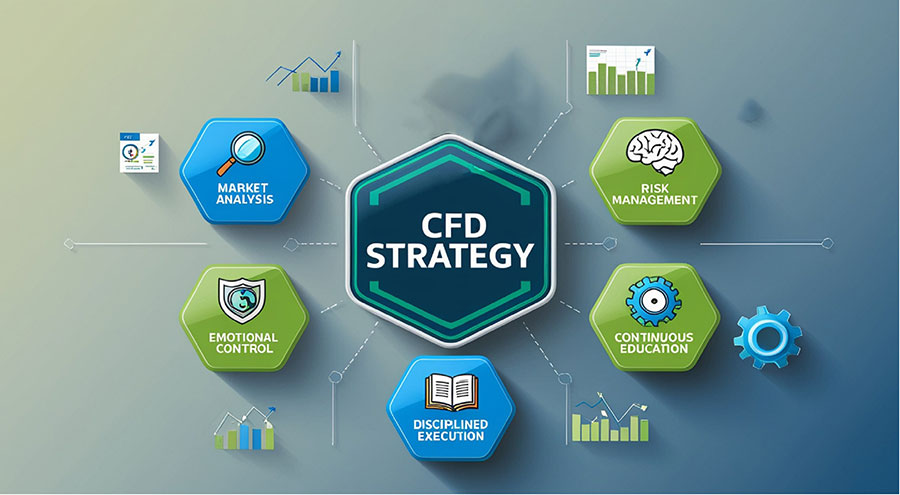
Techniques such as proper position sizing, strategic use of stop-loss and take-profit orders, responsible leverage management, emotional discipline, and continuous learning all contribute to a comprehensive risk management framework. Each of these elements works together to protect capital while allowing traders to take advantage of market opportunities.